Table of Contents
ToggleINTRO – POWER SHARING
In a democratic country, power should not remain in the hands of only one person or one group. Power sharing means the distribution of power among different organs of government and among different groups of society so that everyone gets a fair chance to participate in decision-making.
In simple words, power sharing ensures that no one becomes too powerful and everyone’s voice is heard. It is considered the very spirit of democracy.
Power sharing is important because it helps in maintaining peace, equality and stability in a country. When power is shared properly, it reduces conflicts between different social groups.
Power sharing is the basic principle of democracy. A democratic government works on the idea that people are the real source of power. Therefore, power must be shared among:
- Legislature (makes laws)
- Executive (implements laws)
- Judiciary (interprets laws)
- People (through elections)
This ensures that democracy remains fair and accountable.
The chapter begins with examples showing how power sharing can either solve problems or create conflicts if not handled properly. This shows that power sharing is not just a theory but a practical necessity for peaceful coexistence.
After completing these notes, test your understanding by practicing important MCQ questions.
EXAMPLE OF BELGIUM
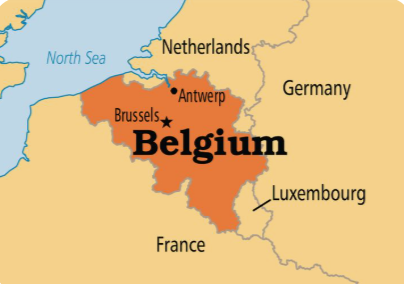
Belgium is a small country in Europe, but it provides a very important example of how power sharing can help maintain peace in a diverse society. Despite having differences in language and culture, Belgium managed to avoid major conflicts by adopting a smart power-sharing arrangement.
This example teaches us that diversity can become a strength if power is shared wisely.
*Social Composition of Belgium
Belgium has a very diverse population divided mainly on the basis of language. The main groups are:
- Dutch-speaking community (Flemish)
About 59% of the population lives in the Flemish region and speaks Dutch. This group forms the majority in the country. - French-speaking community
Around 40% of the population speaks French and lives mainly in the Wallonia region. - German-speaking minority
About 1% of the population speaks German. Though small in number, their rights are also protected in the power-sharing system. - Special case of the capital city
The capital city Brussels has a different composition:- Around 80% French-speaking
- Around 20% Dutch-speaking
This was a sensitive issue because the Dutch-speaking people were the majority in the country but a minority in the capital.
*The Problem Faced by Belgium
During the 1950s and 1960s, tensions started growing between the Dutch-speaking and French-speaking communities. The French-speaking community was relatively richer and more powerful, which made the Dutch-speaking community feel neglected.
This situation could have led to serious conflict if power was not shared properly.
# Real-life connection
Just like in a classroom, if only a few students always get leadership roles, others may feel ignored. But if responsibilities are distributed fairly, the environment becomes cooperative.
*Belgium’s Power Sharing Arrangement
Belgium solved its problem by adopting a carefully designed power-sharing model. Some important features of this arrangement are:
- Equal representation in the central government
The constitution states that the number of Dutch and French-speaking ministers must be equal in the central government.
This ensures that no single community can dominate decision-making. - Special laws require support from both groups
Some important laws can be passed only when a majority from each linguistic group supports them.
This prevents one group from forcing decisions on the other. - State governments were given powers
Many powers were given to state governments of different regions. These governments are not controlled by the central government in their areas of authority. - Community government system
Belgium also created a community government elected by people belonging to one language community.
This government looks after cultural, educational and language-related issues.
# Example: Decisions related to language in schools or cultural programs are taken by community governments.
*Why Belgium Model is Considered Successful?
Belgium’s model is considered successful because it helped in:
- Avoiding civil conflict
- Maintaining unity despite diversity
- Protecting minority rights
- Ensuring political stability
*Democracy connection
This shows that democracy is not just about majority rule, but also about respecting minority rights.
*Conclusion
Belgium shows that power sharing is the best way to manage diversity in a democracy. Instead of allowing conflicts to grow, Belgium chose cooperation and mutual respect. Belgium proves that sharing power is the smartest way to maintain unity in a diverse country.
Strengthen your understanding of the Belgium case – Practice Topic-wise Question Answers here.
EXAMPLE OF SRI LANKA
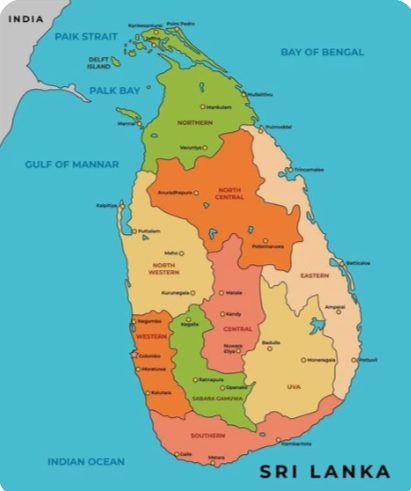
Sri Lanka is an island country located near India. It presents an example of how the absence of power sharing can lead to conflicts and tensions in society.
Unlike Belgium, Sri Lanka did not initially adopt proper power-sharing policies, which resulted in disputes between different communities. This example helps students understand why power sharing is necessary in a democracy.
*Social Composition of Sri Lanka
Sri Lanka also has a diverse population mainly divided on the basis of language and religion:
- Sinhala-speaking community (Majority)
About 74% of the population are Sinhala speakers. Most of them follow Buddhism and form the majority community. - Tamil-speaking community (Minority)
About 18% of the population are Tamils. They are divided into:- Sri Lankan Tamils (native residents)
- Indian Tamils (whose ancestors came from India during British rule)
- Religious diversity
- Sinhala community → Mostly Buddhists
- Tamil community → Mostly Hindus or Muslims
This diversity required careful power sharing, but it was not handled properly.
*Majoritarianism in Sri Lanka
After independence in 1948, the leaders of Sri Lanka followed a policy of majoritarianism, which means giving preference to the majority community in governance.
Some important steps taken by the government were:
- Sinhala declared as the only official language (1956)
The government passed an Act declaring Sinhala as the only official language, ignoring Tamil.
This made Tamil speakers feel excluded in jobs and administration. - Preference to Buddhism
The constitution gave special protection to Buddhism. This made other religious groups feel that they were not treated equally. - Preference in jobs and education
Government policies favoured Sinhala applicants in university admissions and government jobs, which increased dissatisfaction among Tamils.
# Real-life connection:
Imagine in a school if only students from one section are given chances in competitions and leadership roles. Other students would naturally feel treated unfairly. Similar feelings developed among Tamils in Sri Lanka.
*Result of These Policies
These unfair policies led to serious consequences:
- Growing distrust between communities
- Protests by Tamil groups
- Demand for equal rights
- Eventually, a civil war situation developed in the country
This shows that ignoring power sharing can threaten national unity.
*What Can We Learn from Sri Lanka?
Sri Lanka teaches us that:
- Democracy is not just about majority rule.
- Majority must respect minority rights.
- Equal treatment is necessary for peace.
- Lack of power sharing can create instability.
*Democracy connection:
A true democracy always tries to include every group in decision-making rather than ignoring minorities.
*Conclusion
Sri Lanka’s experience clearly shows that ignoring power sharing can lead to conflict and disunity. A country can remain peaceful only when all communities feel respected and included. Sri Lanka teaches us that without power sharing, democracy cannot function smoothly.
Strengthen your understanding of the Sri Lanka case – Practice Topic-wise Question Answers here.
WHY POWER SHARING IS DESIRABLE?
Power sharing is one of the most important features of democracy. It is desirable because it helps in maintaining peace, stability and unity in a country. When power is shared among different groups and institutions, it reduces the chances of conflict and makes the system more democratic.
There are two main reasons why power sharing is desirable: prudential reasons and moral reasons.
*Prudential Reasons (Practical Reasons)
Prudential reasons are based on practical thinking. These reasons focus on maintaining peace and stability in society.
Power sharing is important because:
- Reduces social conflict
When power is shared among different social groups, it reduces the chances of clashes. Every group feels that their interests are protected.
Example: Belgium avoided conflict by giving equal power to Dutch and French communities. - Ensures political stability
When people feel included in governance, they develop trust in the system. This leads to a stable government and peaceful society. - Better decision making
When power is shared, more people participate in decision-making. This brings different ideas and improves the quality of decisions. - Maintains unity in diversity
Countries with diverse cultures and languages can remain united only when everyone gets representation.
# Real-life connection:
Just like in a group project, if all members share responsibility, the project becomes successful. But if only one student controls everything, conflicts may arise.
*Moral Reasons (Ethical Reasons)
Moral reasons are based on the values and principles of democracy. Democracy is based on the idea that power belongs to the people.
Power sharing is important because:
- It is the true spirit of democracy
Democracy means government by the people. Therefore, power should be shared among citizens through participation and representation. - Promotes equality
Every citizen is equal in a democracy. Power sharing ensures that everyone gets equal political rights. - Encourages participation
It increases citizen participation in political processes like elections, discussions and decision-making. - Respects minority rights
Democracy is not only about majority rule but also about protecting minority interests.
# Real-world democracy example:
In India, people elect their representatives through elections. This shows power sharing between citizens and government.
Difference Between Prudential and Moral Reasons
|
Basis |
Prudential Reasons |
Moral Reasons |
|
Meaning |
Based on practical benefits |
Based on democratic values |
|
Focus |
Peace and stability |
Equality and democracy |
|
Importance |
Helps avoid conflict |
Makes democracy meaningful |
*Conclusion
Power sharing is desirable because it brings stability as well as strengthens democracy. Prudential reasons explain its practical benefits, while moral reasons justify it on ethical grounds. Power sharing is desirable because it is both useful for peace and essential for democracy.
Strengthen your understanding of the ‘Why Power Sharing is Desirable’ case – Practice Topic-wise Question Answers here.
FORMS OF POWER SHARING
In a democracy, power can be shared in different ways to ensure that no single person or institution has complete control. These arrangements help in maintaining balance, fairness and participation in governance.
There are four major forms of power sharing commonly seen in democratic countries.
1.Power Sharing among Different Organs of Government (Horizontal Distribution)
Power is shared among the three main organs of government:
- Legislature (makes laws)
- Executive (implements laws)
- Judiciary (interprets laws)
This is called horizontal distribution of power because power is shared at the same level among different institutions.
*Why is this important?
Each organ checks the other. This is called the system of checks and balances.
*Example:
If the legislature makes a law that violates the Constitution, the judiciary can declare it invalid.
# Real-life connection:
Just like in a school where responsibilities are divided among principal, teachers and discipline committee to avoid misuse of authority.
2.Power Sharing among Different Levels of Government (Vertical Distribution)
Power is also shared among different levels of government such as:
- Central Government
- State Government
- Local Government (Municipality and Panchayat)
This is called vertical distribution of power because power is divided among higher and lower levels of government.
*Why is this important?
This ensures better administration because local governments understand local problems better.
*Example:
In India:
- Central Government handles defence and foreign affairs.
- State Government handles police and agriculture.
- Local bodies manage sanitation and local roads.
# Real-life connection:
Just like school management where decisions are taken at school level, class level and house level depending on the need.
3.Power Sharing among Different Social Groups
Power may also be shared among different social groups such as:
- Religious groups
- Linguistic groups
- Ethnic groups
This type of power sharing protects the interests of minorities and prevents social conflicts.
*Example:
In Belgium, equal representation was given to Dutch and French-speaking communities in the central government.
*Why is this important?
It creates a sense of security and belonging among different communities.
4.Power Sharing among Political Parties, Pressure Groups and Movements
In a democracy, power is also shared among:
- Different political parties
- Pressure groups
- Social movements
*How does this happen?
- Through elections, different parties get a chance to form the government.
- Pressure groups influence government decisions.
- Sometimes power is shared through coalition governments.
*Example:
When no single party gets a majority, two or more parties form a coalition government and share power.
# Real-life connection:
Just like in a school council where different clubs and groups share responsibilities to organise events.
*Conclusion
Power sharing can take many forms in a democracy. These arrangements ensure participation, prevent misuse of power and maintain stability. Different forms of power sharing make democracy more effective, inclusive and balanced.
Strengthen your understanding of the ‘Form of Power Sharing’ case – Practice Topic-wise Question Answers here.